
Dental Implants Sioux Falls SD | Permanent Tooth Replacement | River Ridge
Restore your confidence and protect your oral health with permanent, natural-looking tooth replacements in Sioux Falls.
At River Ridge Oral & Maxillofacial Surgical Center, we provide a permanent solution. Dental implants are the only tooth replacement option that mimics the natural root of a tooth, safeguarding your bone structure and preventing the premature wear of your remaining teeth. With a successful placement rate of over 96%, our surgeons are the region’s trusted experts in implant technology.
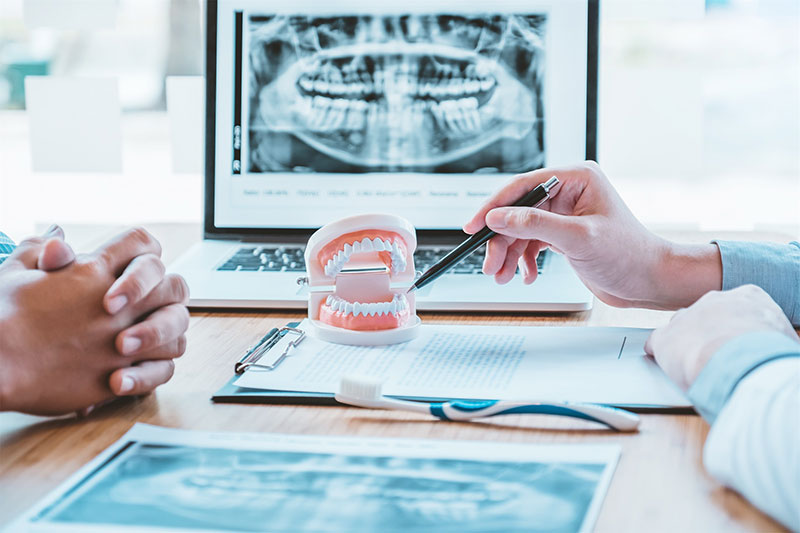
The Advantages of Dental Implants
Unlike traditional bridges or dentures, dental implants offer a lifetime of benefits:
- Preserve Healthy Teeth: Bridges require grinding down adjacent healthy teeth for support; implants stand alone, leaving your natural teeth untouched.
- Stop Bone Loss: Implants stimulate the jawbone, maintaining your facial profile and preventing the “collapsed” look associated with tooth loss.
- Natural Function: Enjoy the ability to eat, speak, and smile with a restoration that looks, feels, and functions exactly like a natural tooth.
- Long-Term Value: While other options may require replacement every few years, a dental implant is designed to last a lifetime with proper care.
Tooth Replacement Options
You can select from a number of different options to replace your missing teeth – from temporary to long-lasting solutions.
- Fixed Bridge – A fixed bridge is a connected set of replacement teeth. For support, it is cemented into position on top of the teeth adjacent to the empty space. The protective outer layer of these teeth is usually removed or ground down prior to attaching the bridge.
- Flipper – A fragile, temporary and inexpensive solution is a removable plastic tooth with a plastic retainer, often called a “flipper”.
- Metal Partial – A less fragile option is a removable partial denture cast in metal and plastic. It is held in place by wire clips. A removable partial denture can be removed and reinserted when required by the patient.
- Denture – The most common solution, for people missing all teeth in one or both jaws, is complete dentures. Some people adapt well to dentures. Others find them uncomfortable, even intolerable, because of differences in jaw size and shape.
- Dental Implants – Dental implants are the most comfortable and permanent solution. They form a strong foundation for teeth and keep the jaw healthy and strong. Implants support individual replacement teeth or secure specialized dentures in place. Unlike bridges, no healthy teeth are damaged and can last a lifetime. Implant-supported replacement teeth can be attractive, stable, and comfortable for almost any patient.
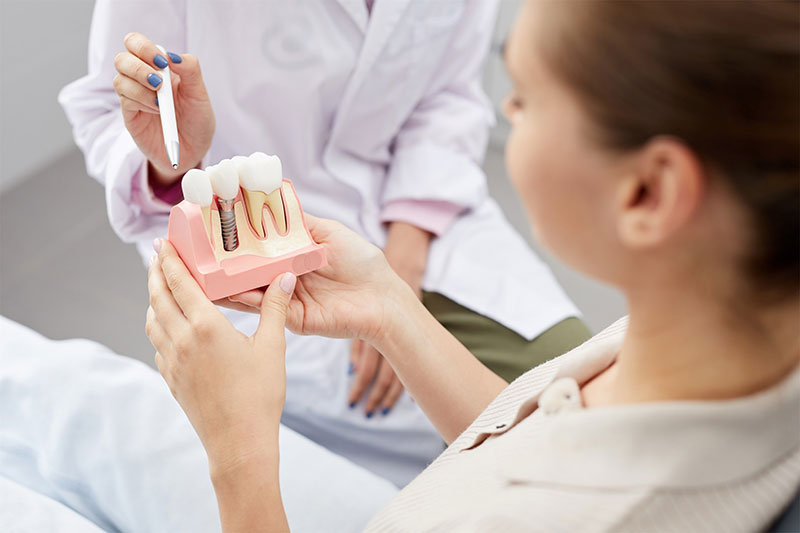
Our Team Approach to Restorative Care
We utilize a restorative-driven approach to ensure the best aesthetic and functional outcome. This means we use advanced Cone-Beam CT scanning to plan the exact position of your implant before surgery begins. We work in close coordination with your referring dentist, who will place the final custom crown once the implant has healed.
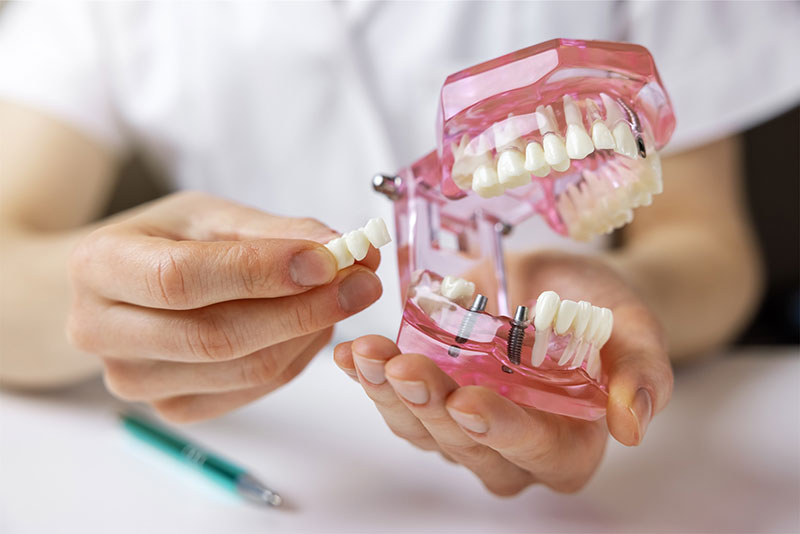
Ensuring a Strong Foundation
The key to a long-lasting implant is the quality of the bone.
- Same-Day Placement: In many cases, we can perform the Tooth Extraction and implant placement on the same day to minimize your clinic visits.
- Bone Grafting for Implants: If your tooth has been missing for some time, the bone may be too thin for an implant. We can perform Bone Grafting like site preservation or a sinus lift to create a stable, healthy foundation.
- Soft Tissue Grafting: To ensure a natural appearance and easy cleaning, we can also perform brief gum tissue grafts during the implant process.
What to Expect: Comfort & Cost
We believe in total transparency. During your consultation, we provide a clear estimate tailored to your specific needs.
- Is it painful? Most patients find the procedure surprisingly comfortable. Using advanced IV Sedation Options and precise surgical techniques, we ensure a stress-free experience.
- Financial Ease: We are in-network with six major dental insurances and offer flexible financing through CareCredit or Cherry. Explore our Insurance & Financing options or ask how we can coordinate your treatment timeline to maximize your annual insurance benefits.

Healing After Dental Surgery
Learn more about your healing journey after dental implant surgery. If you have any questions or concerns post surgery reach out to our office directly.
FAQ
What happens to the jawbone after losing a tooth?
When an adult tooth is lost or extracted, the underlying jawbone literally “melts away” due to a lack of physical stimulation, typically losing 25% of its supporting structure within the first year alone. Natural teeth are embedded in the jawbone and stimulate it through activities like chewing and biting. Without this necessary stimulation, the alveolar bone breaks down and resorbs. Over time, severe bone loss can cause up to one-third of your jaw’s thickness to disappear, resulting in a collapsed facial profile, skin wrinkling around the mouth, shifting or loosening of remaining teeth, and chronic jaw (TMJ) pain.
Why are dental implants preferred over bridges, flippers, or dentures?
Dental implants are considered the most comfortable and permanent solution because they form a strong foundation that preserves your natural jawbone without damaging your remaining teeth. Other tooth replacement options have distinct structural compromises:
- Fixed Bridges: Require the dentist to grind down or completely remove the protective outer layer of healthy adjacent teeth to cement the prosthetic in place, increasing the risk that those teeth will wear out prematurely or become damaged.
- Flippers: A removable plastic tooth and retainer combination that serves only as a fragile, temporary, and inexpensive solution.
- Metal Partials: A removable prosthetic held awkwardly in place by visible metal wire clips.
- Complete Dentures: Rest entirely on top of the gum line without providing any direct stimulation to the bone. This leads to continuous bone deterioration, causing the dentures to slip, loosen, and become uncomfortable or intolerable over time.
What is a restorative-driven approach to dental implant surgery?
A restorative-driven approach means that your dental implant’s exact position is digitally planned and mapped prior to surgery to ensure your general dentist can later attach a crown with flawless aesthetics and functional stability. At River Ridge, this advanced protocol involves utilizing Cone-Beam CT (CBCT) 3D scanning during your initial consultation. This allows our surgeons to precisely evaluate your bone availability and anatomy before placement. We work in direct communication and partnership with your referring dentist, who places the final custom dental crown once the surgical site has completely healed.
When can a dental implant be placed after a tooth extraction?
Dental implants are traditionally placed three months after a tooth extraction, though our surgeons can often perform the extraction and implant placement on the exact same day if sufficient bone architecture exists. Same-day extraction and placement simplify the process by eliminating the need for a second surgical appointment. However, if a tooth has been missing for many years and the bony ridge is extremely thin, a bone graft must be placed at the site and allowed to heal for up to six months to rebuild the necessary width and volume before the implant post can be safely stabilized.
Is dental implant surgery painful and what should I expect during recovery?
Dental implant surgery is an outpatient procedure performed under advanced IV sedation, making the process completely anxiety-free and painless during treatment. Because the titanium implant post is placed beneath the gum tissue and does not require any root canal therapy, post-operative discomfort is generally minimal. Patients may experience some temporary sensitivity to hot or cold foods and drinks for a few weeks, but can typically resume normal activities within a few days. Depending on your healing timeline, your surgeon may place a healing abutment, support post, or healing cap onto the implant during surgery or at a brief follow-up visit to allow your gum tissue to safely mature.
How long do dental implants last and what is their clinical success rate?
Dental implants are designed to last a lifetime with proper care, and River Ridge oral surgeons have achieved a verified, long-term successful implant placement rate of over 96%. This exceptional success track record is built on data collected from more than 2,000 patients and hundreds of regularly referring regional dental professionals who trust our board-certified specialists for advanced implant technology.
How does River Ridge help patients manage and reduce the cost of dental implants?
We prioritize absolute fee transparency by providing customized estimates, crediting back your initial consultation fee upon treatment completion, and offering strategic scheduling to split procedures across two separate financial years to maximize your insurance allowances. To ensure care is accessible, we leverage multiple financial frameworks:
- In-Network Benefits: We are in-network with six major dental insurances (Delta Dental, MetLife, Aetna, Cigna PPO, Ameritas Plus, and ADDP United Concordia) and submit pre-determination requests to establish your precise out-of-pocket estimates.
- Flexible Financing: We accept CareCredit, which provides interest-free payment plans over 6, 12, or 18 months, as well as Cherry patient financing, which performs a soft credit check to qualify patients for up to $10,000 with convenient monthly 0% APR options.